
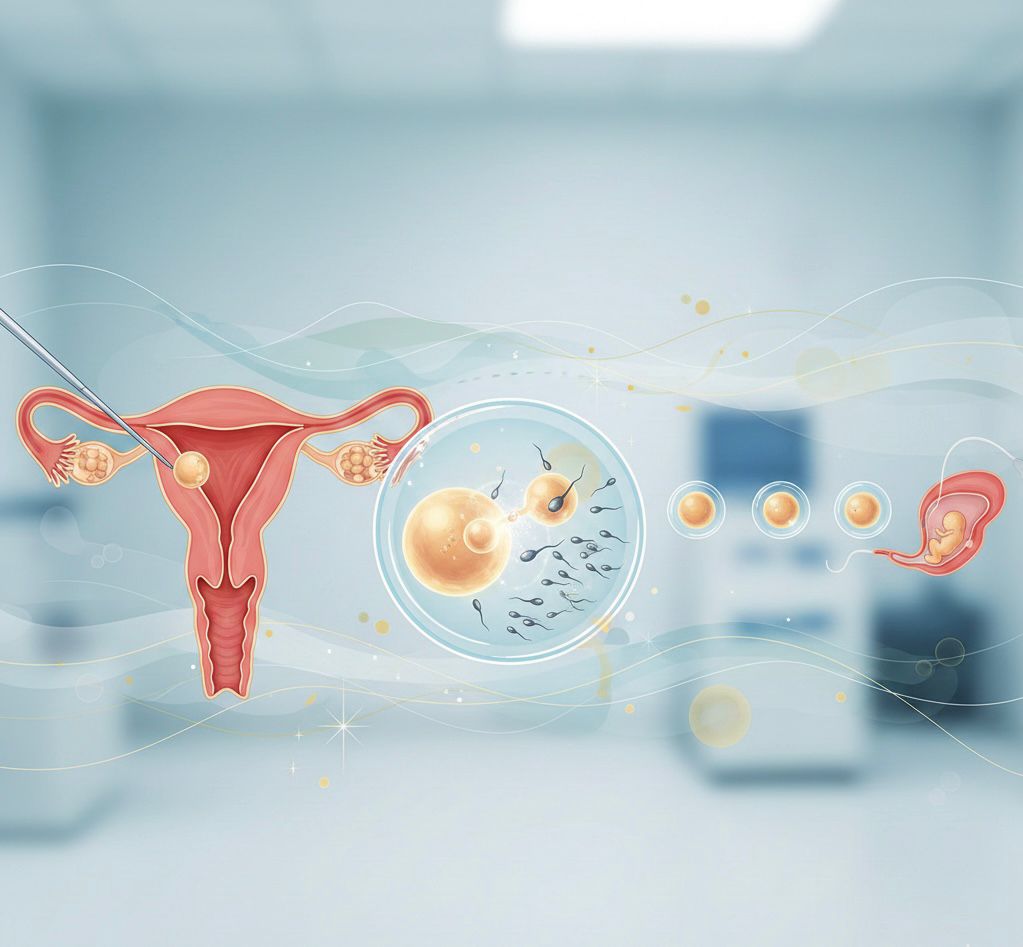
IVF (In Vitro Fertilization) is an assisted reproductive technology where:
Eggs are collected from the woman’s ovaries
Sperm is collected from the partner or donor
Fertilization happens in a laboratory (not inside the body)
The fertilized egg (embryo) is then placed into the woman’s uterus
If the embryo implants successfully, pregnancy begins — just like a natural pregnancy from that point onward.
Think of IVF as a medical way of helping the egg and sperm meet under the best possible conditions.
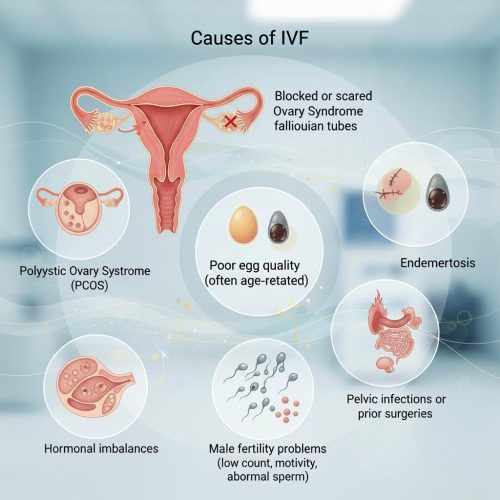
What Are the “Causes” Behind Needing IVF?
Technically, IVF doesn’t have causes — instead, there are conditions that make IVF necessary or helpful.
Here are the most common medical reasons doctors recommend IVF:
1.Blocked or scarred fallopian tubes.
2.Polycystic Ovary Syndrome (PCOS).
3.Endometriosis.
4.Poor egg quality (often age-related).
5.Male fertility problems (low count, motility, abnormal sperm).
6.Hormonal imbalances
7.Pelvic infections or prior surgeries.
8.Repeated miscarriages.
Does IVF Always Work?
IVF offers excellent success rates — but results depend on:
1.Age of the woman.
2.Egg and sperm quality.
3.Health of the uterus.
4.Lifestyle factors (weight, smoking, diet, stress).
5.Underlying medical conditions.
6.Younger women generally have higher success rates, but many women in their late 30s and early 40s also conceive through IVF — sometimes using donor eggs if needed.
Common Myths About IVF — Busted
Myth: IVF babies are “different.”
Truth: IVF babies are as healthy as naturally conceived babies.
Myth: IVF guarantees pregnancy.
Truth: IVF improves chances but does not promise 100% success.
Myth: IVF is only for older women.
Truth: Many younger couples with medical issues also benefit from IVF.
1️⃣ CONSULTATION & TESTS
Doctors first review the medical history, perform hormone blood tests, pelvic ultrasound, and semen analysis in order to understand the root cause of infertility and plan for treatment.
2️⃣ Ovarian Stimulation
Hormone injections (for about 8–12 days) are used to stimulate the ovaries to produce multiple eggs. Growth is monitored with regular ultrasounds and blood tests. A “trigger shot” readies the eggs for retrieval.
3️⃣ Egg Retrieval & Fertilization
Eggs are retrieved by a minor procedure under light anaesthesia. In the laboratory, eggs are fertilized by sperm – conventional IVF or ICSI.
4️⃣ Embryo Growth & Selection
Fertilized eggs are allowed to develop in incubators for 3–5 days. Physicians select the healthiest embryo (genetic testing may be done if advised). Additional embryos may be frozen.
5️⃣ Embryo Transfer & Pregnancy Test
The embryo is then put inside the uterus by means of a painless procedure. Progesterone supports implantation. Pregnancy is confirmed after 10–14 days with a blood test.
Final note
Success depends on age, quality of the egg and sperm, health, and lifestyle-the planning will be individualized to your needs by your doctor.

