
When sperm is not present in the semen due to obstructive or non-obstructive azoospermia, advanced surgical sperm retrieval techniques can offer new hope. At Ghrace & Hope IVF, our experienced fertility specialists use modern TESA, PESA, and Micro TESE procedures to retrieve healthy sperm for IVF and ICSI, helping couples move closer to achieving parenthood.
Sometimes, the biggest breakthrough in fertility doesn’t come from a new medication or a complicated treatment plan. It comes from finding something that seemed impossible to find. For many men diagnosed with severe male infertility or azoospermia, the challenge isn’t whether sperm exist at all, but where they are. Modern reproductive medicine has made it possible to retrieve sperm directly from the reproductive organs, opening doors to biological parenthood that once remained closed.
Procedures such as TESA treatment in Delhi, PESA treatment in Delhi and Micro TESE treatment in Delhi have become valuable options for couples facing complex male infertility. These minimally invasive techniques are carefully selected based on an individual’s diagnosis and are often combined with IVF, IUI and ICSI to improve the chances of achieving pregnancy.
Rather than viewing these procedures as surgical interventions alone, they should be understood as part of a larger fertility journey—one built on accurate diagnosis, advanced laboratory support and personalized medical care.
Not every man experiencing infertility requires sperm retrieval. These procedures are usually considered when sperm are absent in the semen sample or cannot be ejaculated naturally due to specific medical conditions.
A fertility specialist first investigates the underlying cause through semen analysis, hormonal assessment, ultrasound evaluation, genetic testing when necessary and physical examination. Only after identifying the reason behind infertility is the most appropriate sperm retrieval method recommended. This individualized approach ensures that patients receive treatment suited to their condition instead of following a standard protocol.
Although these procedures all aim to retrieve sperm, they differ significantly in technique, purpose and the medical conditions they address.
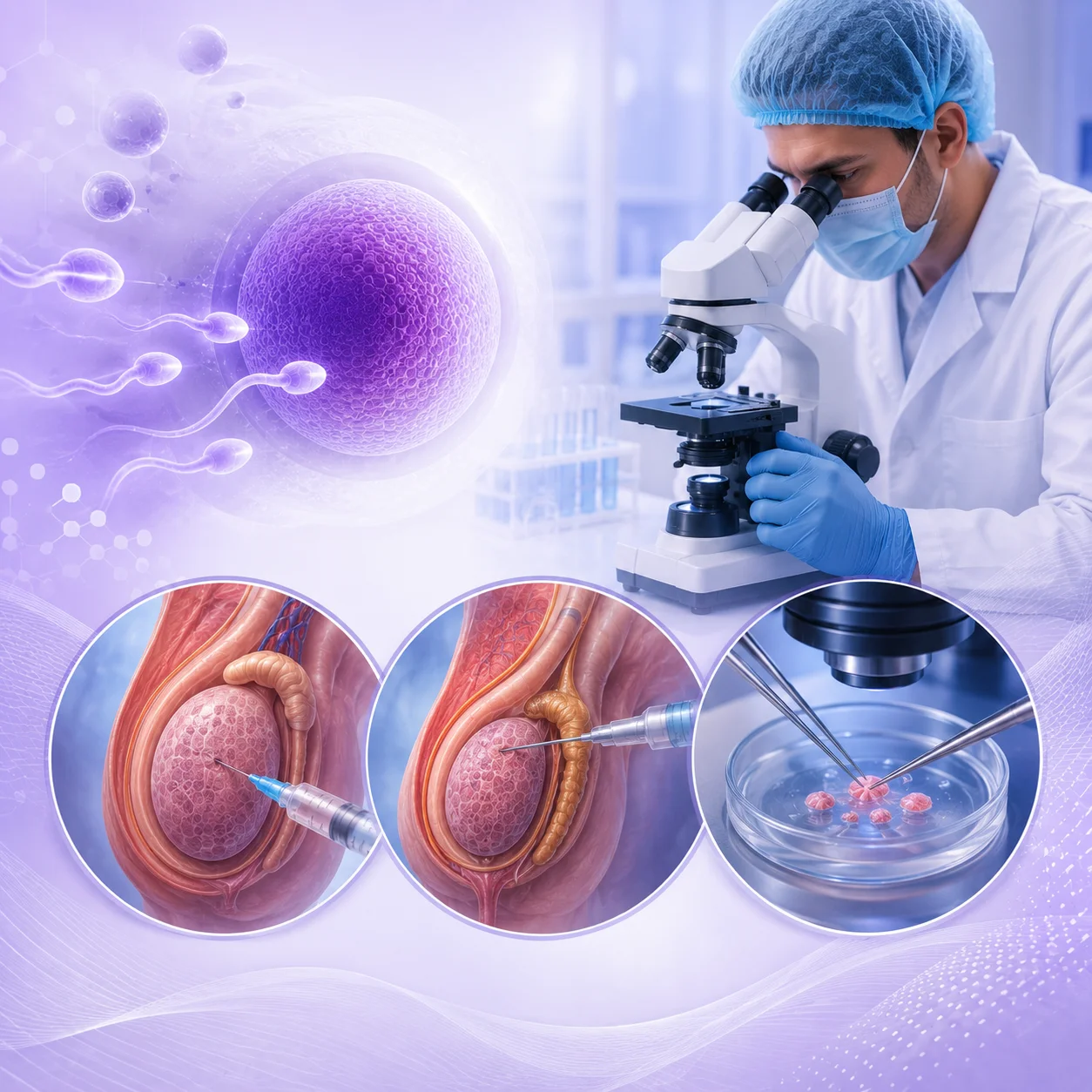
TESA treatment in Delhi refers to Testicular Sperm Aspiration, a minimally invasive procedure in which a fine needle is used to collect sperm directly from the testicular tissue. The procedure is commonly recommended for men with obstructive azoospermia or selected cases where sperm production exists but sperm cannot reach the semen.
Because it usually requires only local anesthesia and involves minimal discomfort, recovery is generally quick, allowing patients to resume normal activities within a short period. Many couples choose TESA treatment in Delhi because it offers a relatively simple solution when sperm production is normal but blocked from natural release.
Unlike TESA, Percutaneous Epididymal Sperm Aspiration retrieves sperm from the epididymis—the small coiled tube where sperm mature and are stored.
PESA treatment in Delhi is often recommended for men with obstructive azoospermia, previous vasectomy, congenital absence of the vas deferens, or reproductive tract blockage. Since mature sperm are usually present inside the epididymis, this technique can provide sufficient sperm for IVF treatment without requiring more extensive surgery.
For patients seeking less invasive treatment, PESA treatment in Delhi often represents an effective first option when the diagnosis clearly indicates obstruction.
Some men produce very few sperm, making retrieval much more challenging. This is where microsurgical expertise becomes especially valuable.
Micro TESE treatment in Delhi involves the use of a high-powered operating microscope that allows the surgeon to carefully examine the testicular tissue and identify areas most likely to contain sperm. Instead of removing large amounts of tissue, the microscope helps preserve healthy structures while increasing the likelihood of successful sperm retrieval.
Men diagnosed with non-obstructive azoospermia often benefit from Micro TESE treatment in Delhi, particularly when previous attempts at sperm retrieval have been unsuccessful or when sperm production is extremely limited.
Although technically more advanced than conventional techniques, Micro-TESE has significantly improved the chances of biological fatherhood for many patients who previously had very few treatment options.
The success of sperm retrieval depends on far more than the surgical procedure itself. Equally important are the quality of laboratory support, embryology expertise, fertility planning and post-procedure care.
An experienced TESE treatment clinic in Delhi brings together fertility specialists, urologists, embryologists, anesthetists and counselors who work collaboratively throughout the treatment process.
The laboratory also plays a crucial role. Once sperm are retrieved, embryologists carefully examine the sample, isolate viable sperm and prepare them for ICSI. Even a technically successful surgery depends on expert laboratory handling to achieve the best possible outcome. Choosing a specialized TESE treatment clinic in Delhi ensures that every stage—from diagnosis to embryo development—is managed within a coordinated fertility program.
Many patients naturally focus on the surgical aspect of treatment, but embryology is equally important. After retrieval, sperm may be extremely limited in number. Skilled embryologists spend considerable time identifying healthy sperm under specialized microscopes before performing Intracytoplasmic Sperm Injection (ICSI), where a single sperm is injected directly into a mature egg.
This remarkable combination of microsurgery and laboratory precision has transformed the treatment landscape for severe male infertility over the past two decades.
At Ghrace & Hope IVF, the surgical and embryology teams work closely together, ensuring that sperm retrieval procedures are carefully synchronized with IVF treatment Delhi whenever required.

Patients are often surprised to learn that recovery from TESA and PESA is generally straightforward.
Mild discomfort, slight swelling, or temporary bruising may occur, but these symptoms usually improve within a few days. Most men return to routine daily activities relatively quickly, although strenuous exercise should be avoided for a short period as advised by the treating doctor.
Recovery following Micro-TESE may take slightly longer because it involves microsurgical exploration, but careful surgical techniques help minimize discomfort and support healing.
Following postoperative instructions carefully contributes to a smooth recovery and reduces the risk of complications.
The cost of surgical sperm retrieval varies because every patient’s condition and treatment plan are different.
Several factors influence the overall expense, including:
Patients should focus not only on treatment costs but also on the experience of the clinical team and the quality of laboratory facilities, as these directly influence treatment outcomes.

Experience matters significantly when surgical sperm retrieval is being considered. An established PESA treatment clinic in Delhi should provide comprehensive fertility evaluations, transparent treatment planning, experienced male infertility specialists, top male infertility treatment, advanced operating facilities and an experienced embryology laboratory.
Patients should also feel comfortable asking questions about surgical experience, retrieval success rates, possible alternatives and expected recovery. Open communication builds confidence and allows families to make informed decisions throughout treatment.
Choosing the right PESA treatment clinic in Delhi means selecting a centre that values careful diagnosis and personalized care rather than recommending procedures unnecessarily.
For many couples, the emotional burden of male infertility is just as significant as the medical challenge itself. Feelings of uncertainty, disappointment and self-doubt are common, yet they should never prevent someone from seeking expert help.
Today’s fertility treatments continue to evolve and surgical sperm retrieval has become one of the most important advances in reproductive medicine. Men who were once told they had little chance of biological fatherhood now have treatment options supported by advanced microsurgery and modern embryology.
Every fertility journey is different. Some couples achieve success after a straightforward procedure, while others require a more comprehensive treatment plan involving IVF, IUI and ICSI. What remains constant is the importance of individualized care and realistic guidance.
At Ghrace & Hope IVF, every treatment plan begins with understanding the patient rather than simply treating a diagnosis. With experienced specialists, advanced reproductive technology and compassionate support, couples receive care designed to maximize both confidence and clinical outcomes.
The path to parenthood is rarely identical for everyone. Yet with the right diagnosis, the right expertise and the right fertility team, procedures such as TESA, PESA and Micro-TESE can become the turning point that helps transform hope into a growing family.